- Virtual Analog Subtractive Synthesizers Definition
- Virtual Analog Subtractive Synthesizers 2
- Virtual Analog Subtractive Synthesizers 1
- Virtual Analog Subtractive Synthesizers For Beginners
Syntheway has released Synthractive, a stereo subtractive synthesizer.
Features:
Virtual Analog Subtractive Synthesizers Definition
Jan 04, 2018 For higher quality (free) videos please visit Sormena.org. A large percentage of virtual synths you see on the market are what I would term “virtual analog.” Meaning they take their cues from. My virtual analog synthesizer can work either in 1-layer mode or in 2-layer mode. A layer is a block that produces the sound given by its complete set-up In 2-layer mode, such blocks are two, and therefore when the tone is played, sound is produced that is the sum of two independent layers. Odsay is a two-oscillator virtual analog synth featuring subtractive synthesis. The VST features sawtooth, square, and pulse waveforms which can be modulated by: LFO or ADSR-envelope, white/pink noise, oscillator-sync modulated by ADSR, an LFO or sample-and-hold.
- Two Oscillators. Each one features a fine-tuning, pulse width and level parameters, as well as the following selectors: waveform, octave and note.
- Filter Section. A state variable filter with filter cutoff, resonance, keyboard tracking, filter type controls.
- Filter Envelope. This section provides control of the filter cutoff frequency over time, with ADSR parameters: attack time, decay time, sustain level, release time plus a level knob that defines the envelope overall level.
- Amplitude Envelope. This section controls the volume or amplitude of the sound with independent control over each ADSR stage with an amplitude envelope overall level.
- Two Low-Frequency Oscillators. The rate and depth parameters apply LFO modulation of various aspects of the audio signal to apply effects such as vibrato or tremolo. Other parameter settings adds motion or variability to sounds such as waveform, source, destination and invert controls.
- Stereo Reverb.
- Stereo Delay.
- Preset Manager. Built-in browser to load and save presets and banks.
- 40 Presets.
Price: $43.90.
on Jan 08, 2017 in Synths & Sound Design 4 comments
Virtual Analog Subtractive Synthesizers 2
1. Spectrasonics Omnisphere 2
Omnisphere is one of those synths that would probably turn up on just about everyone’s lists. Like many of the synths on this list, Omnisphere (currently Omnisphere 2) combines a number of synthesis techniques, including both oscillators and sample-based source material (including user waves), wavetable synthesis, granular synthesis, and even FM. Combining a huge factory library with comprehensive programming options, the emphasis is on heavily processed sounds of all kinds, from traditional synth tones to dense swirling pads to arpeggios to shifting, chugging, twinkling soundscapes and musical noises that defy easy description. Playability includes nice touches like the Orb, a real-time joystick-type controller that can simultaneously vary many parameters. Omnisphere has been around for quite a while, and has certainly earned its place on a list of soft synths that hardware synths really can’t touch.
Web:https://www.spectrasonics.net/products/omnisphere/index.php
Review: https://ask.audio/articles/review-spectrasonics-omnisphere-2
Courses:https://ask.audio/academy?nleloc=application/omnisphere
2. NI Massive
Native Instrument’s Massive is another synth that’s been around for years, and its popularity and sound pretty much guarantee it a place of honor. Massive follows a traditional subtractive synthesis models, with oscillators (three, plus noise) filters (two), amplifier, modulation (LFO), and effects. But there’s much more to it than that simple description suggests.
Massive’s oscillators are more than just simple analog waves (like sine, square, sawtooth, pulse, etc.)—they’re Wavetables, which, besides those basic, traditional shapes, also include a large collection of richer and more complex wavetables to use as raw material, making for a much wider range of possible sounds. The overall subtractive architecture is familiar enough to be accessible to most synthesists, yet it offers extra levels of flexibility, accessed from the various programming tabs in its center panel, like the Routing panel, where you can view and tweak the signal flow of the various modules that make up a patch, and the drag-and-drop icons that make quick work of building up modulation patching. All in all, Massive’s combination of accessibility and flexibility have made it a perennial favorite among synthesists of all stripes.
Web:https://www.native-instruments.com/en/products/komplete/synths/massive/
Courses:https://ask.audio/academy?nleloc=application/massive
3. NI Reaktor
Another entry from Native Instruments, Reaktor (currently Reaktor 6) is not really a synthesizer per se—it’s potentially every synthesizer you could imagine. Reaktor is an object-oriented programming environment for building your own synthesizers, and it’s one of the most powerful tools available for those who want ultimate control over their instruments. But you don’t have to have a degree in computer programming or DSP to use Reaktor—while it does contain a daunting set of under-the-hood tools and building blocks, it also comes with a large collection of finished synthesizer designs—called Ensembles—and there are many more available from third-parties as well. Some of these are available as separate, stand-alone synths, like NI’s own Razor (an additive synthesis design), Prism (a physical modeling instrument), and Monark (a well-regarded take on the venerable Minimoog).
But the real power of Reaktor comes when you go behind the front panel, and delve into the nuts & bolts of synthesizer architecture. Taking full advantage of everything the programming environment has to offer may require a significant investment in time and energy, but for inveterate tweakers it’s well worth the effort, going well beyond even the possibilities available from assembling your own modular synth in the real world.
The latest Scratch Live software is version 1.9.0, new features in this version include: SP-6 Sample Player. Rane SL 3 Support. Show album art on deck. Key Tag support. Apr 20, 2009 Scratch Live 1.9.0 supports the new Rane SL 3 hardware. Play up to 6 samples simultaneously with different playback modes. Stream your Microphone or AUX input straight to the virtual deck. New looping effect where the playhead jumps back to. 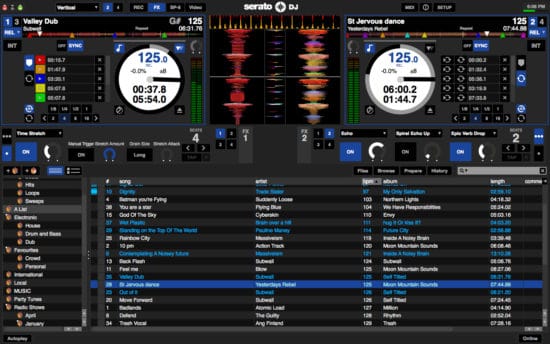 To download Scratch Live 1.9.1 Windows installer please sign in or create an account. Scratch Live is vinyl emulation software that operates exclusively with Rane hardware. Mix and scratch digital music on your computer with Serato Control Vinyl or Control CDs. We've been hard at work making Serato DJ Pro the best DJ software on the planet. Sep 13, 2016 Disclaimer This page is not a piece of advice to uninstall Scratch Live 1.9.1 (19136) by Serato Audio Research from your PC, nor are we saying that Scratch Live 1.9.1 (19136) by Serato Audio Research is not a good application for your PC.
Web:https://www.native-instruments.com/en/products/komplete/synths/reaktor-6/
Review: https://ask.audio/articles/review-native-instruments-reaktor-6
Courses:https://ask.audio/academy?nleloc=application/reaktor
4. Rob Papen Blue II
Rob Papen offers a number of popular synths (like Predator, Blade, and others, including the now-discontinued Albino), but Blue (currently Blue II) is probably the flagship of the line. Utilizing when Papen has dubbed “Cross-Fusion Synthesis”, Blue II combines FM, Phase Distortion, Waveshaping, and Subtractive synthesis, to create one highly flexible and great-sounding instrument. No less than six (!) oscillators freely combine all the different methods of sound generation in a single patch, and the graphic display makes routing and processing relatively easy for a synth with so many options. The helpful graphic displays include features like a straightforward FM matrix and graphic envelopes, along with sequencer and arpeggiator pages, and make Blue II’s programming power readily accessible, making it easy and efficient to tweak sounds—far easier than twiddling hardware knobs blindly.
5. LennarDigital Sylenth
LennarDigital’s Sylenth has become a very popular synth of late. Unlike many of the other entries in this list, it’s not a be-all, do-all, end-all design. Sylenth is designed to do one thing—emulate classic analog synthesis—but do it exceptionally well. It’s a dual-layered design, with 4 traditional analog-style oscillators, and a classic subtractive synthesis architecture. All the virtual analog components were carefully designed to offer the rich sound of their real analog counterparts, with alias-free oscillators, and filters that include nonlinear saturation and self-oscillation options.
A comprehensive set of envelopes, modulators, and an arpeggiator is rounded off with a full array of audio effects—everything needed to achieve classic analog synth sounds with the warmth and edge of traditional hardware synths is included. A faux LCD panel helps simplify programing the more tweaky features, and flexible routing allows for the two oscillator layers to cross-feed the filters, making for an especially nice bit of analog character in the digital world.
Web:https://www.lennardigital.com/sylenth1/
Course:https://ask.audio/academy?nleloc=topic/sylenth
6. U-he Diva & Zebra 2 & Repro 1
U-he is not a synth, it’s a company—actually it’s software developer Urs Heckmann (plus a small staff), who’s come up with many excellent and characterful synth designs (and effects plug-ins) over the years, many available as freeware (like the popular Zoyd synth, and the unique Triple Cheese, which uses comb filters to generate/process its sounds). The U-he line includes several synths, but I want to focus on two of the most popular, Zebra 2 and Diva.
Urs describes Zebra 2 as a “wireless modular synthesizer”—it incorporates many types of synthesis, including subtractive, additive, and FM, along with an equally versatile array of sound-modifying tools like comb-filtering (physical modeling), all freely patchable. Only modules used in a particular patch are displayed, reducing front-panel clutter, and making for a more streamlined interface. The centrally-located modulation grid offers an easy way to connect modules, and helps visualize signal flow in complex patches. And for performance, Zebra 2 offers a “Perform” panel, with no less than four (!) programmable and assignable X/Y pads.
Diva, on the other hand, is a more dedicated analog-style synth—it models the sounds of various classic analog synth modules. But two things set it apart from other analog modelers. The first is that you can mix and match components/modules inspired by different synths, creating hybrid designs. The other is Diva’s cutting-edge approach to modeling analog circuits, which promises to achieve the next level in emulating the nuance of real analog instruments. This faithfulness to real analog sound brings with it a bit of a CPU hit, but users have embraced it, so this Diva may be worth her high-maintenance ways.
Web:https://www.u-he.com
Virtual Analog Subtractive Synthesizers 1
Review: https://ask.audio/articles/review-uhe-repro1
Virtual Analog Subtractive Synthesizers For Beginners
Course:https://ask.audio/academy?nleloc=application/uhe
7. AAS Modeling Collection
As I said earlier, lists like this typically combine entries that are on everyone’s top-10 with choices of a more personal nature—this last entry probably reflects my interest in physical modeling techniques. AAS—Applied Acoustic Systems—makes a variety of virtual instruments and “sound banks”—their instruments are based on physical modeling, which, as you may know, is a method of creating a sound by emulating the physical way that sound is created in the real world. So instead of traditional oscillators, filters, and envelopes, you’ll typically find exciters, disturbers, and resonators—simulations of different vibrating materials, striking, plucking, bowing, and blowing techniques, and complex resonances and timbral responses.
AAS’s modeling collection includes instruments that put these kinds of tools to use emulating strings, guitars, electric pianos, and even analog synth circuitry, but the two I want to mention are Tassman, a general-purpose physical-modeling synth, and their latest, Chromaphone, which is dedicated to modeling all manner of percussive sounds. Both of these instruments let the user synthesize highly realistic sounds, thanks to the physical modeling of acoustic sound-generation, but those sounds don’t necessarily have to emulate actual instruments—for more creative applications, the modeling tools can be used to create very acoustic-sounding instruments that don’t—maybe couldn’t—actually exist in the real world, but sound (and play) like they do! Physical modeling technology is widely used nowadays for processing—component modeling is routinely employed to simulate the circuit path of classic analog hardware, including synth components like oscillators and filters—and it’s gradually being applied more to instrument design.
Wrap-up
Like with any list, there are plenty more great synths I could have included but didn’t, for one reason or another (I decided to limit my choices to separate plug-ins, eliminating obvious possibilities like Alchemy and Sculpture, which are exclusively built-in to Logic). I also didn't include any audio examples—how can you boil the characteristic sound of synths that each offer so much variety into a few seconds of one or two patches? There are plenty of audio demos available online, along with trial versions of most, if not all, of the synths I mentioned, and I think the best approach for anyone who wants to get to know what particular models are capable of is to go ahead and try ‘em out yourself—a little homework that, for once, should actually be a lot of fun!